From filing to labels, one data chain
Approvals, filings, formulas, and labels live in one dataset — label content naturally matches registrations.
Cosmetics, pharma, and health brands face complex labels, strict compliance, and massive SKU counts. This chain covers everything from filing assistance to single-item traceability.

These situations probably sound familiar
Filings and labels, two datasets
Approvals and filings in one spreadsheet, labels in design files. Change one without the other and you have a compliance risk.
Many SKUs, even more versions
Massive SKU counts multiplied by specification, channel, and market differences make manual label verification costly and error-prone.
Paper labels: slow and expensive
Traditional paper labels involve multiple processes, misapplication risk, and changeover downtime — especially painful for imported goods requiring Chinese labels.
Item-level traceability out of reach
Batch-level labels can't trace to individual items, leaving grey market diversion, counterfeiting, and channel flow opaque.
From NMPA filing to the label on the bottle
All six stages share one master dataset. When one stage changes, downstream labels update automatically — no more manual cross-checking.
NMPA Filing
Assist with filing preparation and regulatory liaison; upon approval, data is structured and stored.
Filing Application
File registration applications per target market requirements; enter data once, reuse everywhere.
Filing Review
Internal and external filing reviews flow online; every change is logged and traceable.
Filing Management
Unified management of filing validity, changes, versions, and linked products with proactive alerts.
Formula Mgmt
Centralized formula and ingredient data; when a formula changes, all affected labels are flagged.
Label Generation
Generate labels from filings and formulas; multi-language, multi-spec one-click output always matching filings.
Label Management System · label.imagecolor.cn
All six stages run inside the label management system. One-item-one-code, traceability and E-Label are application-layer modules on top. Label design is handled by the smart designer — data always comes from a single source.
Open Label Management ↗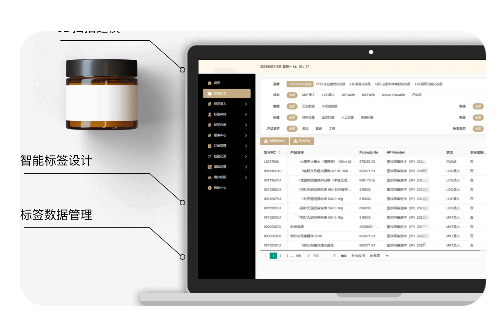
After the label is printed, the data starts working
One-item-one-code System
A digital identity engine across the entire chain — source traceable, destination trackable, responsibility auditable. Extensible to membership, loyalty, and repurchase engagement.
Three phases: coding & authentication → traceability & channel management → marketing & consumer engagement.Traceability & Anti-counterfeiting
Build a trust chain from source to consumer: shoppers scan to verify authenticity while the system tracks every item from factory to endpoint.
Automatic flow-anomaly alerts with multi-tier distributor shipping control.E-Label Electronic Label
An electronic label implementation solution responding to NMPA e-label regulations: reuses the label system's product master data and maps fields to generate display pages.
No new system needed — typically 4-8 weeks to pilot go-live.Products used in this solution
| Product | Stage | Role in this solution |
|---|---|---|
| Smart Designer ↗ | Design | Label & packaging layout, AIGC generation, bitmap-to-vector, compliance check, outputting print-ready artwork. |
| Label Mgmt System ↗ | Manage | Filing, registration application review, formula & label master data — the backbone system of this chain. |
| Flexible Label Direct Print | Produce | Bonded warehouse direct printing, production line or in-warehouse coding, achieving zero-inventory label production. |
| One-item-one-code | Apply | Generate a unique identity for every product, linking batches, channels, logistics and orders. |
| Traceability | Apply | Scan verification, channel flow identification, and diversion alerts |
| E-Label | Apply | Compliant display page generation and publishing, keeping content synchronized with filing data. |
Results from pharma & beauty clients

E-label and smart label management upgrade built on the label system
↓ E-label compliance break risk
Read case →
Smart label design and business collaboration powered by label system
↑ Label design & management efficiency
Read case →
Full-chain traceability via one-item-one-code and inkjet coding
2024.10 Contract signed
Read case →Questions you might also have
Do we need to build a new system for e-labels?
No. If you already have a label management system, you can reuse the underlying data to quickly extend e-label capabilities, avoiding redundant builds.
How do you ensure scan-display content matches filing information?
The system reads approved data directly from the label management module to generate the display page, and supports automatic synchronization when changes occur.
What's the difference between one-item-one-code and a regular QR code?
A regular QR code is batch-level — all products of the same model show the same content. One-item-one-code gives each product a unique identifier and can trace down to the individual item level.
Compared to traditional labeling, where does inkjet coding save the most?
Main savings come from label materials, transportation logistics, manual labeling labor, and changeover downtime — total cost typically drops 30-50%.
Can existing label data be used for overseas localization?
Yes. If you're already using the label management system, product master data can be directly reused for multi-language expansion without re-entry.